

Paint by Number Tips
Twelve practical tips for cleaner paint-by-number results, with a practice sheet to try them on.
Print at 100% on heavy paper
Turn off “fit to page” so shapes keep their size. Use 200–250 gsm matte card for paint, plain paper for pencils and markers.
Tape the sheet down
Painter’s tape on all four edges stops the paper from curling when it gets wet and keeps it still while you work.
Set out paint by number
Put a drop of each paint next to its number on a palette or the lid of a jar, so you never pick up the wrong color.
Start with one number
Paint every shape of one color before moving on. You rinse the brush less and spot missed shapes more easily.
Large dark areas first
Fill the big dark shapes first, then lighter ones. Small slips of light paint over dark edges are easy to touch up.
Work top to bottom
Right-handed painters work from top left, left-handed from top right, so your hand never rests on wet paint.
Use the right brush
A size 2 round brush covers most shapes, a 0 or 000 detail brush the small ones, and a small flat brush the sky.
Thin coats, then a second
Two thin coats cover printed numbers better than one thick coat, and they dry without ridges.
Keep acrylic workable
Mist the palette with water now and then, or cover it between sessions so the paint does not skin over.
Hide the numbers
Light colors over dark numbers may need a third coat. A tiny dot of white first, then the color, also works.
Fix mistakes when dry
Let a slip dry, then paint the correct color over it. Wiping wet paint smears it into the next shape.
Finish with the outlines
If an edge looks rough, run a fine brush with the darker of the two colors along it; the shape will look crisp.
Numbered color key0 shapes
Template1/4
Mid-Century Circles
All 4 are below · tap one to open it herePaper
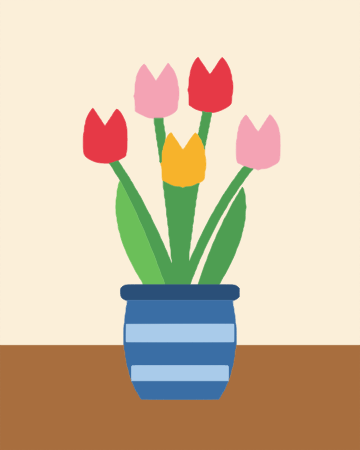
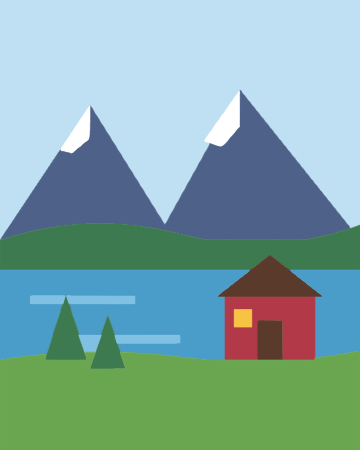
Practice Sheets for These Tips

Common Questions
Should I paint dark or light colors first?
Paint large dark areas first; light colors cover small slips on their edges, while dark paint over light shows through less.
How do I hide the numbers?
Use opaque paint and a second thin coat on light colors, or print with lighter numbers.
What brush sizes do I need?
A size 2 round for most shapes, a 000 or 0 detail brush for small ones and a small flat brush for big areas.